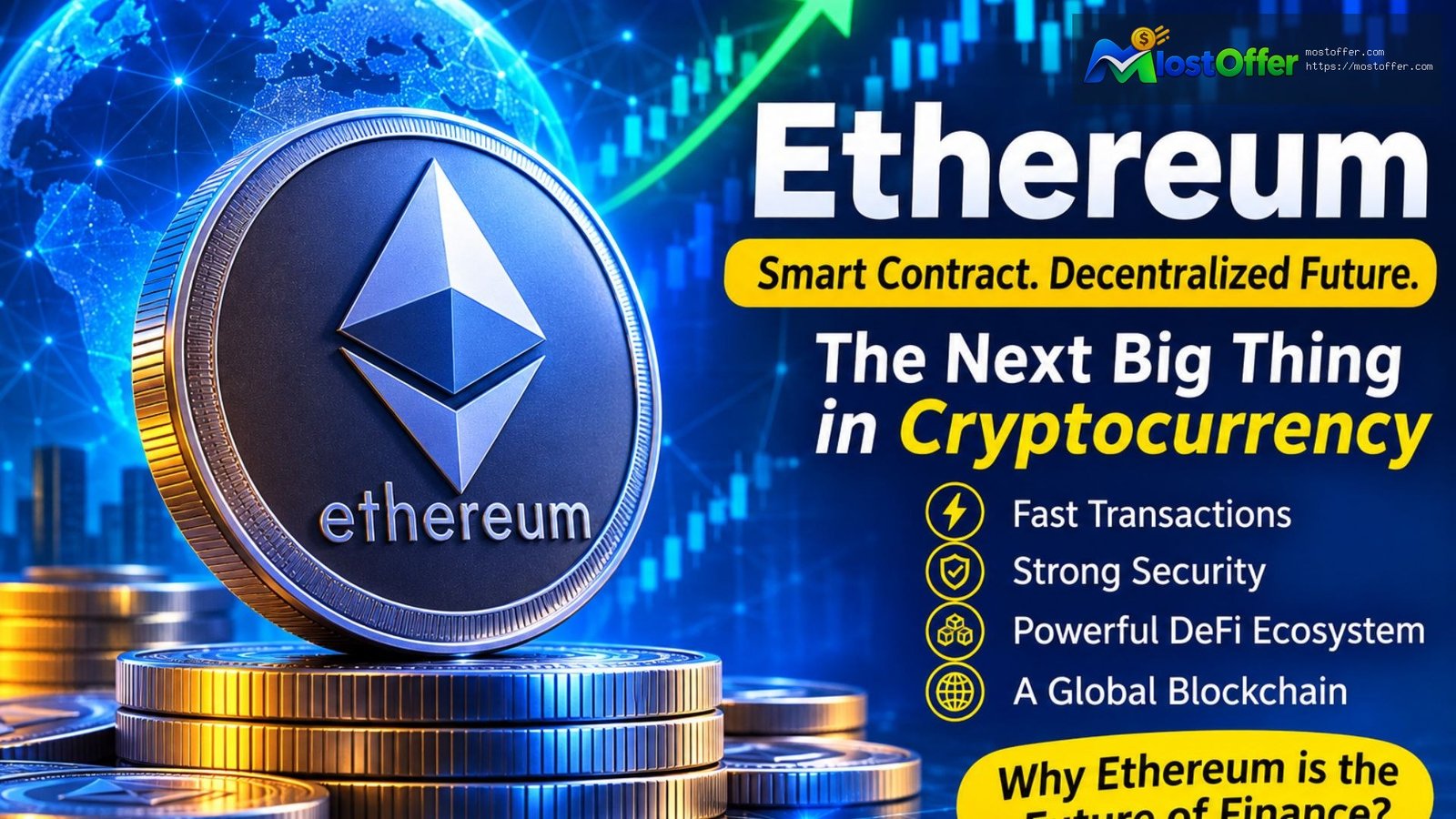
A decentralised network of computers known as nodes powers Ethereum. By maintaining and validating transactions, these machines contribute to the network's continued security and openness. Ethereum uses blockchain technology to share information throughout its network rather than relying on a single business, bank, or government to manage its database.
Ether, or ETH for short, is Ethereum's native cryptocurrency. It is utilised to engage with applications, pay transaction fees, and take part in the network's economic structure. Users typically have to pay a transaction charge known as gas when sending ETH, exchanging digital tokens, or interacting with smart contracts.
Ethereum's capacity to support programmable blockchain applications is one of its most significant innovations. It is now a well-liked platform for gaming, digital collectables, decentralised finance, and many other blockchain-based applications because of this characteristic.
2. The Principal Advantages of Ethereum Smart Contracts
One of Ethereum's most potent features is smart contracts. A smart contract is a blockchain-based computer program that, when certain conditions are met, automatically carries out particular instructions. These agreements can increase the efficiency of digital transactions and lessen the need for middlemen.
Smart contracts, for instance, can be used by a decentralised lending application to handle deposits, compute interest, and handle repayments in accordance with preprogrammed guidelines. The contract's execution may be independently confirmed since it runs on the blockchain.
Decentralisation: Ethereum is not governed by a single central organisation, but rather functions over a dispersed network. This arrangement lessens reliance on centralised authorities.
Transparency: Public verification of blockchain transactions is possible. This makes it possible for consumers and developers to analyse network traffic and comprehend how programs function.
Smart Contract Automation: When specific criteria are met, developers can design programs that carry out activities automatically.
Global Accessibility: Ethereum apps are accessible to anybody with a compatible digital wallet and an internet connection, subject to regional regulations and technological specifications.
Developer Ecosystem: Ethereum boasts a sizable community of companies, researchers, and developers creating blockchain-related tools and applications.
Another consensus method used by Ethereum is Proof of Stake. This means that instead of depending on the energy-intensive mining method utilised by Bitcoin, validators contribute to network security by staking ETH.
3. Ethereum Applications: Decentralised Applications, NFTs, and DeFi
Ethereum is now the basis for a wide range of blockchain applications. Decentralised finance, or DeFi, is one of its most well-known fields. Through blockchain-based systems, these platforms enable users to access financial services like borrowing, lending, and trading digital assets.
Another crucial component of the Ethereum ecosystem is decentralised exchanges. Instead of depending solely on conventional centralised exchanges, they enable users to trade digital tokens via smart contracts. Users should be aware, nevertheless, that decentralised platforms may still be subject to market volatility, smart contract flaws, and technological concerns.
Non-Fungible Tokens (NFTs) are also closely linked to Ethereum. Digital artwork, collectables, gaming objects, and other types of ownership or access can all be represented by NFTs, which are distinct digital tokens. Ethereum-based platforms allow artists and creators to publish and exchange these assets.
Decentralised applications, or dApps, are another important use case. These programs are able to run without relying on a single centralised server for all of their essential operations. Blockchain games, digital identification systems, community platforms, and financial applications are a few examples.
Additionally, companies are investigating Ethereum for automated business agreements, digital certifications, supply chain tracking, and tokenisation. By processing numerous transactions outside of the main Ethereum chain while utilising Ethereum for security and settlement, Layer 2 networks help increase transaction speed and lower costs.
Ethereum is more than just a cryptocurrency, as these various uses show. A wide variety of digital services are supported by this dynamic technology platform.
4. Ethereum's Future: Prospects and Dangers in 2026
Ethereum is still crucial to the advancement of blockchain technology. Network enhancements, developer engagement, corporate adoption, legislative changes, and competition from alternative blockchain platforms will all have an impact on its future.
Scalability is a key component of development. Networks must manage higher transaction volumes without raising fees needlessly as more people utilise blockchain apps. Because it offers more options to execute transactions while linking back to the main network, Ethereum's Layer 2 ecosystem is a crucial component of this endeavour.
Tokenisation of real-world assets presents another potential. This entails using blockchain-based tokens to represent assets like financial instruments, real estate holdings, or other rights. Ethereum is one of the platforms being investigated for these applications because of its smart contract features.
Ethereum's growth may also be influenced by institutional interest in digital assets. Although acceptance varies by nation and legal context, financial firms and IT organisations are still investigating blockchain infrastructure.
Ethereum does, however, come with risks. Investors may lose money if the price of ETH fluctuates dramatically. Scams are still a major worry, smart contracts may have security flaws, and Bitcoin wallets may be hacked. The utilisation of blockchain services and digital assets may also be impacted by regulatory developments.
Anyone thinking about Ethereum should do extensive research on the technology, be aware of the hazards, safeguard private keys, and refrain from making investments they cannot afford to lose.
In conclusion, Ethereum has revolutionised blockchain technology by enabling a wide range of decentralised applications and providing programmable smart contracts. Its potential applications keep growing, ranging from tokenisation and business solutions to DeFi and NFTs. Even if there are still issues with scalability, security, competitiveness, and regulation, Ethereum is a crucial project to understand when considering the future of decentralised technology and cryptocurrencies.